The products that keep our communities running don’t build themselves.
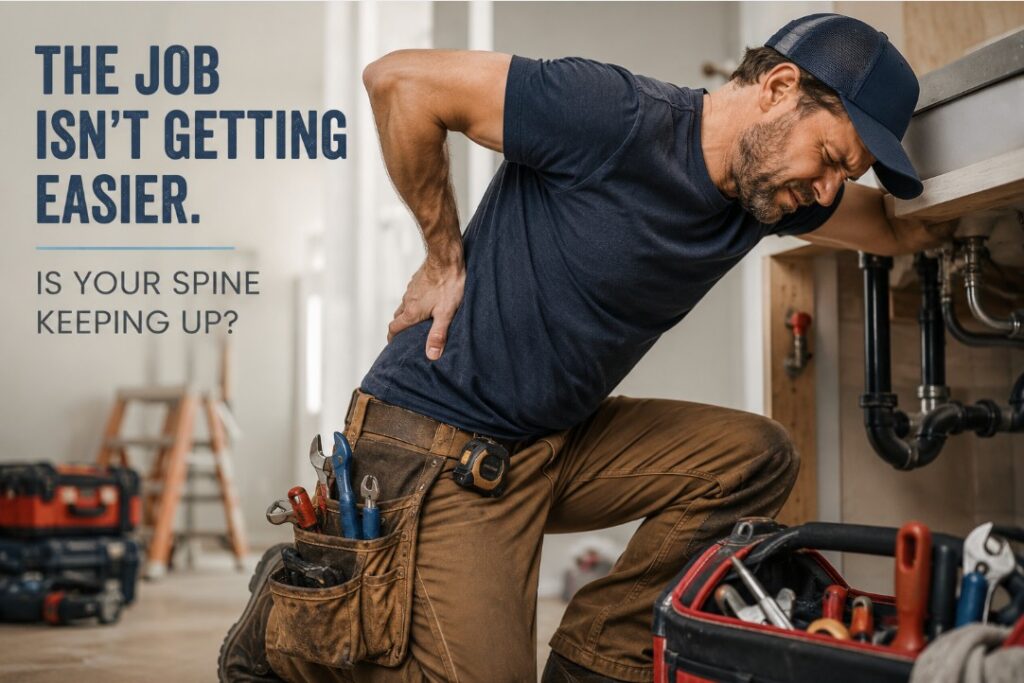
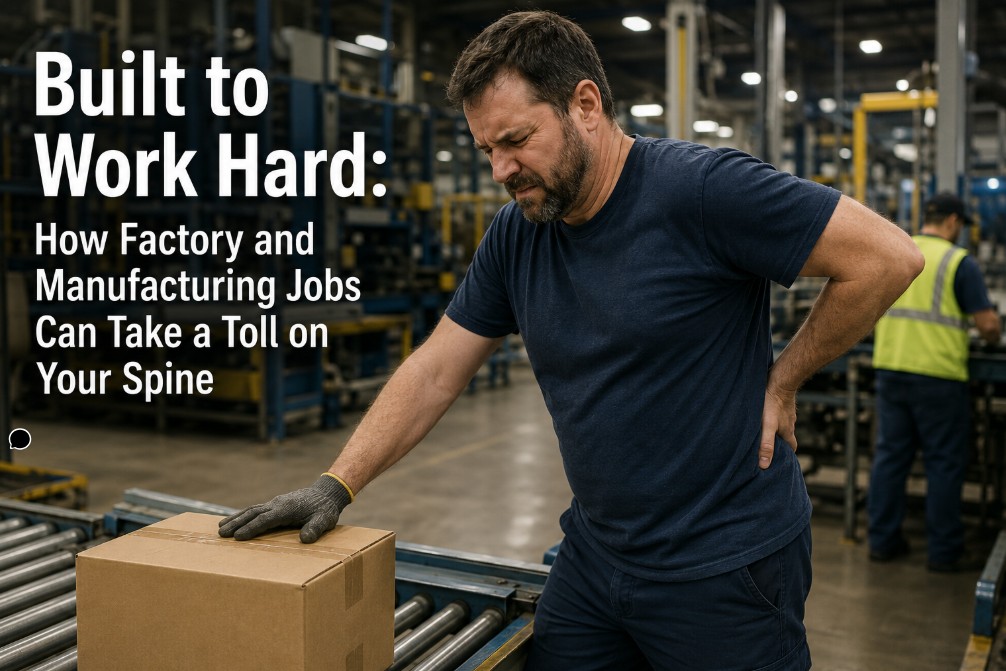
Behind every assembly line, warehouse, production floor, and manufacturing facility are hardworking people who spend their days lifting, carrying, bending, reaching, standing, twisting, and repeating the same movements over and over again.
While these jobs are essential, they can also place tremendous stress on the spine.
At Sauk Spine Chiropractic, we frequently see factory and manufacturing workers who are dealing with chronic neck pain, back pain, sciatica, numbness, or stiffness that has gradually developed over years on the job.
Many assume pain is simply part of getting older or working in manufacturing.
The truth is that chronic pain often has an underlying cause—and there may be solutions that help.
The Wear and Tear of Repetition
When most people think about back injuries, they picture a single incident.
A heavy lift.
A fall.
A sudden twist.
While those injuries certainly happen, many spinal problems develop much more gradually.
Manufacturing workers often perform the same movements hundreds or even thousands of times during a single shift.
Examples include:
-
Reaching overhead
-
Repetitive lifting
-
Twisting while carrying materials
-
Bending to retrieve parts
-
Pushing or pulling equipment
-
Standing on concrete floors
-
Working at conveyor belts
-
Operating machinery for long periods
Each movement places a small amount of stress on the body.
Over months and years, those stresses accumulate.
Why Standing All Day Can Be Hard on the Spine
Many manufacturing jobs require employees to remain on their feet for most or all of their shift.
Standing itself is not harmful. However, standing on hard surfaces for eight, ten, or even twelve hours at a time can place significant strain on the lower back, hips, knees, and feet.
As muscles become fatigued, posture often changes.
The body begins compensating in ways that increase stress on the spine, particularly the discs and joints of the lower back.
This is one reason many workers report that their pain is worse at the end of the day.
The Impact of Repetitive Lifting
The spine is designed to handle movement.
What it doesn’t tolerate as well is repetitive loading without adequate recovery.
Whether you’re lifting boxes, parts, tools, materials, or finished products, each lift creates pressure within the spinal discs.
Over time, this repeated compression may contribute to:
-
Disc degeneration
-
Bulging discs
-
Herniated discs
-
Nerve irritation
-
Sciatica
Many workers don’t notice the problem until symptoms begin affecting their daily lives.
Common Symptoms Manufacturing Workers Experience
Spinal problems often develop slowly.
Common warning signs include:
-
Pain between the shoulder blades
-
Sciatica
-
Numbness or tingling in the arms or legs
-
Pain that worsens during or after a shift
-
Difficulty standing upright after sitting
-
Reduced flexibility and mobility
Unfortunately, many people push through these symptoms for years before seeking help.
Understanding Disc Compression
Between each vertebra sits a spinal disc that acts as a cushion and shock absorber.
These discs absorb forces generated by lifting, bending, twisting, and standing.
Over time, repetitive physical stress can increase pressure within the discs.
When discs become compressed, they may begin pressing on nearby nerves, leading to pain, numbness, tingling, or weakness.
This type of compression is often a significant contributor to chronic neck and back pain.
How Spinal Decompression May Help
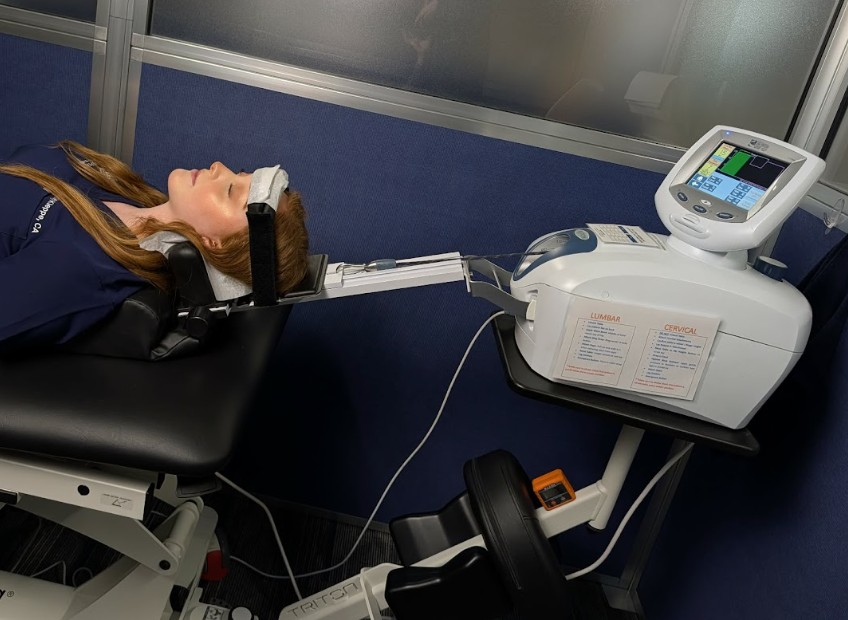
Spinal decompression is a gentle, non-surgical treatment designed to relieve pressure within the spine.
Using a specialized decompression table, controlled stretching forces create space between vertebrae and help reduce pressure on discs and nerves.
For manufacturing workers experiencing disc-related pain, decompression may help:
-
Reduce pressure on spinal discs
-
Relieve nerve irritation
-
Improve mobility
-
Decrease back and neck pain
-
Reduce sciatica symptoms
-
Support the body’s natural healing processes
Many patients are surprised to learn that a treatment can be both effective and comfortable.
Cervical and Lumbar Decompression
Depending on your symptoms, decompression may focus on either the neck or lower back.
Cervical Decompression
May help individuals experiencing:
-
Neck pain
-
Shoulder tension
-
Arm pain
-
Numbness or tingling in the hands
-
Disc-related neck problems
Lumbar Decompression
May help individuals experiencing:
-
Chronic low back pain
-
Sciatica
-
Leg pain
-
Numbness or tingling in the legs
-
Herniated or bulging discs
The goal is to reduce pressure on affected structures so the body can function more efficiently.
The Goal Is to Keep You Working Comfortably
Most factory and manufacturing workers don’t expect to feel perfect.
They simply want to work, support their families, enjoy their hobbies, and get through the day without constant pain.
At Sauk Spine Chiropractic, our focus is helping patients move better, feel better, and maintain the activities that matter most to them.
The sooner spinal issues are addressed, the greater the opportunity to prevent them from becoming more limiting over time.
Don’t Ignore the Warning Signs
If neck pain, back pain, sciatica, or stiffness are becoming part of your daily routine, your body may be telling you it’s time to pay attention.
At Sauk Spine Chiropractic, Dr. John takes the time to understand the demands of your job, evaluate your symptoms, and determine whether spinal decompression may be an appropriate part of your care plan.
Ready to Learn More?
Hard work shouldn’t mean living with chronic pain.
If your job is taking a toll on your neck or back, schedule a consultation with Sauk Spine Chiropractic and learn whether spinal decompression may help you stay active, productive, and comfortable for years to come.