Are you caring for everyone else? Don’t forget your spine!
Healthcare professionals spend their days helping others heal. But who takes care of the people doing the caring?
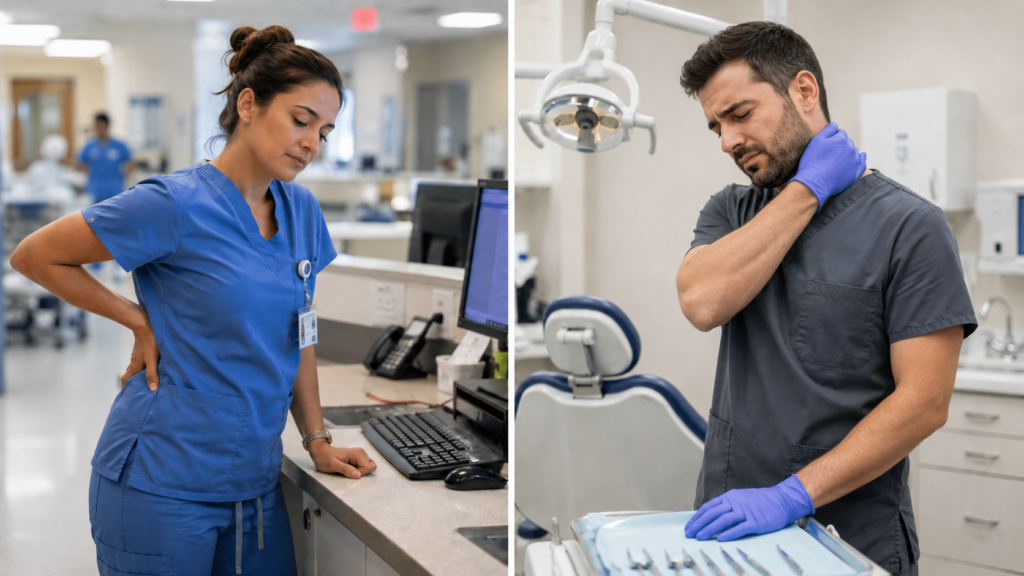
At Sauk Spine Chiropractic, we frequently see nurses, CNAs, medical assistants, therapists, dental professionals, veterinarians, caregivers, and other healthcare workers whose bodies are paying the price for years of physically demanding work.
Healthcare is one of the most physically challenging professions there is. Long shifts, repetitive movement, patient transfers, bending, lifting, twisting, charting, and standing for hours at a time all place tremendous stress on the spine.
Unfortunately, many healthcare workers accept neck pain, back pain, headaches, or sciatica as simply part of the job.
It does not have to be.
Why Healthcare Workers Experience So Much Neck and Back Pain
Most healthcare professionals spend their entire workday moving.
Movement is generally healthy, but repetitive movement under strain can create cumulative stress over time.
Common daily tasks may include:
• Assisting patients with transfers
• Lifting and repositioning individuals
• Leaning over treatment tables or exam rooms
• Pushing equipment
• Standing for extended periods
• Working in awkward positions
• Charting and computer work between patient visits
• Bending, kneeling, or twisting throughout the day
Each activity may seem manageable on its own. But when those same movements are repeated day after day, year after year, they can create wear and tear on the spine.
And for many healthcare workers, the discomfort builds so gradually that they do not realize how much pain they have been carrying.
The Hidden Problem: Repetitive Stress
Many spinal problems do not begin with one dramatic injury. Instead, they develop gradually.
A nurse may help transfer hundreds of patients each month.
A dental hygienist may spend thousands of hours leaning forward.
A physical therapist may repeatedly demonstrate exercises and assist patients through movement.
A veterinarian may bend, kneel, lift, restrain animals, and work in awkward positions throughout the day.
A caregiver may spend years lifting, reaching, helping, and supporting others.
Over time, these repeated stresses can affect the discs, joints, muscles, and nerves that support healthy movement.
People tell us all the time, “I thought this was just part of getting older.”
Or, “I figured pain was just part of the job.”
But chronic pain is not something you should have to ignore just because your work is demanding.
Common Symptoms Healthcare Workers Experience
Symptoms often begin subtly.
Many healthcare workers notice:
• Neck stiffness
• Headaches
• Shoulder tension
• Lower back pain
• Hip discomfort
• Sciatica
• Numbness or tingling in the arms or legs
• Pain that worsens during long shifts
• Difficulty recovering between workdays
• Stiffness after charting, lifting, or standing
When these symptoms keep returning, they may be signs that the spine, discs, or nerves are under ongoing stress.
How Spinal Discs Become Compressed
Between each vertebra sits a spinal disc that acts as a cushion and shock absorber.
Years of lifting, bending, twisting, and prolonged standing can increase pressure on those discs. Over time, discs may lose hydration, become compressed, or begin to bulge or herniate.
When a disc places pressure on nearby nerves, symptoms can include:
• Chronic neck pain
• Pain that radiates into the shoulder or arm
• Low back pain
• Sciatica
• Leg numbness or tingling
• Weakness
• Reduced mobility
• Pain that worsens with certain positions or activities
Many healthcare workers are surprised to learn that disc compression may be contributing to symptoms they have experienced for years.
How Spinal Decompression May Help
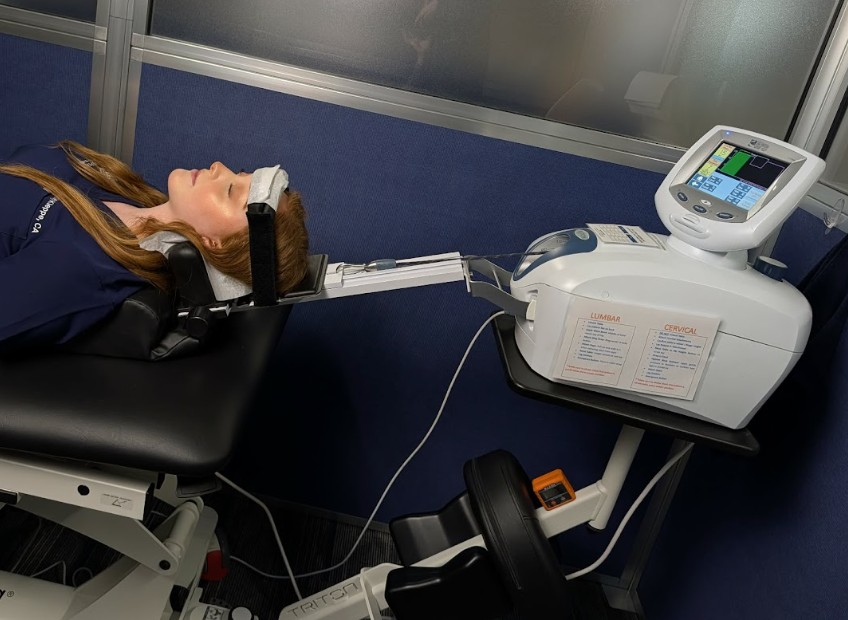
Spinal decompression is a gentle, non-surgical treatment designed to help reduce pressure within the spine.
Using a specialized decompression table, controlled stretching forces gently create space between the vertebrae. This may help relieve pressure on compressed discs and irritated nerves while supporting the body’s natural healing process.
Spinal decompression may be considered for certain patients dealing with:
• Herniated or bulging discs
• Sciatica
• Disc-related neck pain
• Disc-related low back pain
• Nerve irritation
• Radiating arm or leg pain
• Chronic symptoms that have not improved with rest, stretching, or medication
Spinal decompression is not the right fit for every patient or every condition. That is why a thorough evaluation is always the first step.
Cervical Decompression for Neck, Shoulder, and Arm Symptoms
Healthcare workers frequently develop tension and compression in the neck from years of looking downward, leaning forward, charting, and working in sustained positions during patient care.
Cervical decompression may help:
• Relieve neck pain
• Reduce nerve irritation
• Improve mobility
• Decrease shoulder, arm, or hand symptoms
• Reduce tingling or numbness
• Ease chronic muscle tension
For some patients, cervical decompression can be an important part of addressing the source of symptoms rather than simply managing the discomfort.
Lumbar Decompression for Low Back Pain and Sciatica
The lower back absorbs much of the physical strain associated with lifting, transferring, standing, bending, and twisting.
Lumbar decompression may help:
• Reduce pressure on spinal discs
• Relieve sciatica symptoms
• Improve mobility
• Decrease leg pain, numbness, or tingling
• Support disc healing
• Help patients move more comfortably
For many healthcare workers, decompression becomes part of a broader care plan designed to help them continue working with less pain and greater confidence.
You Deserve the Same Care You Give Others
Healthcare workers are often very good at caring for everyone else.
But they are not always good at slowing down and getting help for themselves.
At Sauk Spine Chiropractic, we understand that most healthcare workers are not looking for a quick excuse to stop working. They want to keep doing meaningful work without feeling like their body is breaking down in the process.
You spend your days helping others improve their quality of life.
You deserve the opportunity to enjoy that same quality of life yourself.
Take Care of the Person Behind the Scrubs
If neck pain, back pain, headaches, sciatica, numbness, or tingling are making your workday more difficult, it may be time to address the underlying cause.
At Sauk Spine Chiropractic, Dr. John takes the time to understand both your symptoms and the physical demands of your profession. Together, you will determine whether spinal decompression may be an appropriate part of your care plan.
You take care of patients every day. Let us help take care of you.
Schedule a consultation with Sauk Spine Chiropractic and learn whether spinal decompression may help you move more comfortably, recover more fully, and continue doing the work you love.