
If you have ever felt like your neck or back pain keeps coming back no matter how careful you are, you are not alone.
People ask us about this all the time.
They rest. They stretch. They take medication. They try to be careful with lifting, sitting, driving, working, or exercising. But the pain keeps returning.
Many people assume neck pain, back pain, or sciatica is simply a normal part of aging or the result of a physically demanding job. Farmers, construction workers, truck drivers, healthcare professionals, factory workers, caregivers, and office employees all place stress on their spines day after day.
Over time, that stress can begin to affect the discs, joints, and nerves that allow the spine to move comfortably.
At Sauk Spine Chiropractic, one of the tools we use to help patients find relief from disc-related neck and back pain is spinal decompression therapy.
What Is Spinal Decompression?
Spinal decompression is a gentle, non-surgical therapy designed to help reduce pressure within the spine.
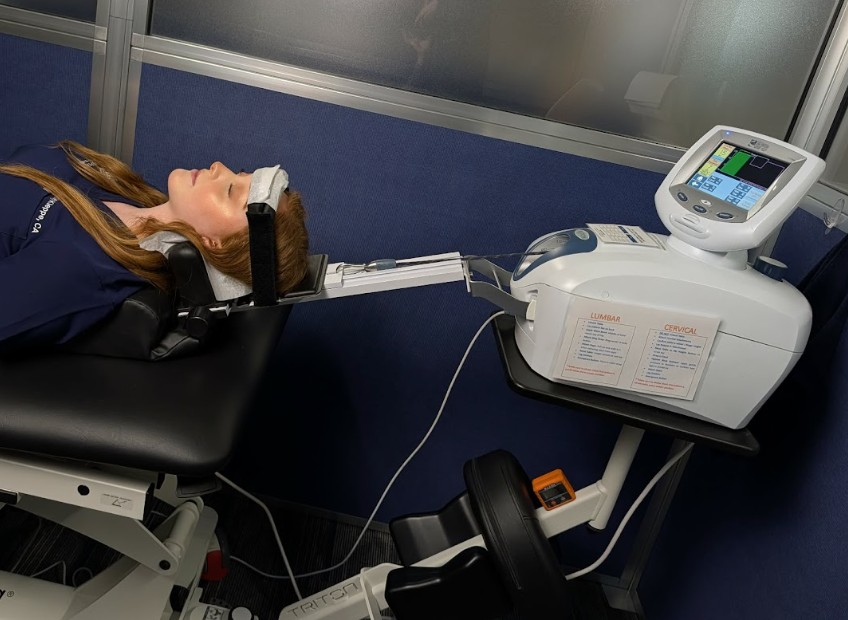
Using a specialized decompression table, controlled stretching forces are applied to either the neck or the lower back. This is known as cervical decompression when treating the neck and lumbar decompression when treating the lower back.
The goal is to gently create space between the vertebrae, which may help reduce pressure on compressed discs and irritated nerves.
Many patients describe spinal decompression as relaxing and comfortable. During a session, you simply lie on the table while the computer-controlled system performs precise movements based on your condition and treatment plan.
Spinal decompression is not the right fit for every patient or every condition, which is why a thorough evaluation is always the first step.
Why Rest Alone May Not Solve the Problem
Rest can be helpful when the body is irritated or inflamed.
But rest does not always address the underlying cause of recurring neck pain, low back pain, or sciatica.
When spinal discs become compressed, irritated, or damaged, they may place pressure on nearby nerves. That pressure can lead to pain, stiffness, numbness, tingling, weakness, or symptoms that travel into the arms or legs.
This is why some patients feel better temporarily, only to have the pain return when they go back to work, sit for long periods, lift something, drive, or resume normal activity.
The goal of spinal decompression is not simply to help you feel better for a day.
The goal is to help reduce pressure in the spine so the body has a better opportunity to heal and function properly.
Conditions That May Benefit from Cervical Decompression
The cervical spine refers to the neck region.
Years of looking down at phones, working at computers, driving, lifting, charting, caring for patients, or performing repetitive tasks can place tremendous stress on the neck.
Cervical decompression may help patients experiencing:
• Neck pain
• Herniated or bulging discs in the neck
• Pinched nerves
• Pain that radiates into the shoulder or arm
• Numbness or tingling in the hands
• Degenerative disc disease
• Chronic stiffness
• Reduced range of motion
By helping relieve pressure on affected discs and nerves, cervical decompression may allow patients to move more comfortably and return to daily activities with less pain.
Conditions That May Benefit from Lumbar Decompression
The lumbar spine is the lower back, and it is one of the hardest-working areas of the body.
Whether you are lifting feed bags, unloading deliveries, caring for patients, working on a factory floor, carrying tools, caring for grandchildren, spending hours behind the wheel, or sitting at a desk, the lower back absorbs strain throughout the day.
Lumbar decompression may help patients experiencing:
• Chronic low back pain
• Herniated or bulging discs
• Sciatica
• Leg pain
• Numbness or tingling in the legs or feet
• Degenerative disc disease
• Spinal stenosis
• Facet joint irritation
Many patients seek decompression after trying rest, medication, stretching, or other conservative treatments without lasting relief.
Why Spinal Decompression Is Different
Many treatments focus mainly on managing symptoms.
Spinal decompression is designed to address one of the underlying contributors to pain: pressure within the spine.
When discs become compressed, they can irritate nearby nerves and limit the spine’s ability to function properly. Decompression gently creates space within the spine, helping reduce that pressure and allowing the body’s natural healing processes to work more effectively.
For many patients, decompression becomes an important part of a broader treatment plan. That plan may also include chiropractic adjustments, corrective exercises, posture recommendations, stretching, strengthening, and practical changes to help reduce stress on the spine during daily life.
What Does Spinal Decompression Feel Like?
One of the most common things patients ask is whether spinal decompression hurts.
For most patients, the answer is no.
Many people are surprised by how comfortable the treatment feels. During decompression, you are positioned securely on the table while the system gently stretches and relaxes the spine in a controlled pattern.
The treatment is precise, gradual, and designed around your specific needs.
Some patients feel relief quickly. Others improve over a series of visits as pressure decreases, mobility improves, and irritation begins to calm down.
Is Spinal Decompression Right for You?
Not every patient is a candidate for decompression therapy.
That is why a thorough evaluation is always the first step.
At Sauk Spine Chiropractic, Dr. John takes the time to understand your symptoms, your health history, and the demands you place on your body each day. Together, you will determine whether cervical or lumbar decompression may be an appropriate part of your care plan.
You may be a candidate for spinal decompression if you are dealing with:
• Neck pain that keeps returning
• Low back pain that does not fully resolve
• Sciatica
• Bulging or herniated discs
• Pain that travels into the arms or legs
• Numbness or tingling
• Symptoms that worsen with sitting, lifting, driving, or repetitive work
• Limited improvement with rest, stretching, or medication
The goal is always to understand the cause of your pain and create a plan that supports long-term function, not just temporary relief.
Ready to Learn More?
You do not have to accept neck pain, back pain, or sciatica as a normal part of life.
If pain is limiting your ability to work, enjoy time with family, stay active, sleep comfortably, or simply get through your day, we would love to help.
Schedule a consultation with Sauk Spine Chiropractic to learn whether spinal decompression therapy may be right for you.
Our goal is simple: help you move better, feel better, and get back to doing the things you love.