For tradespeople, physical work isn’t something you do occasionally.
It’s what you do every day.
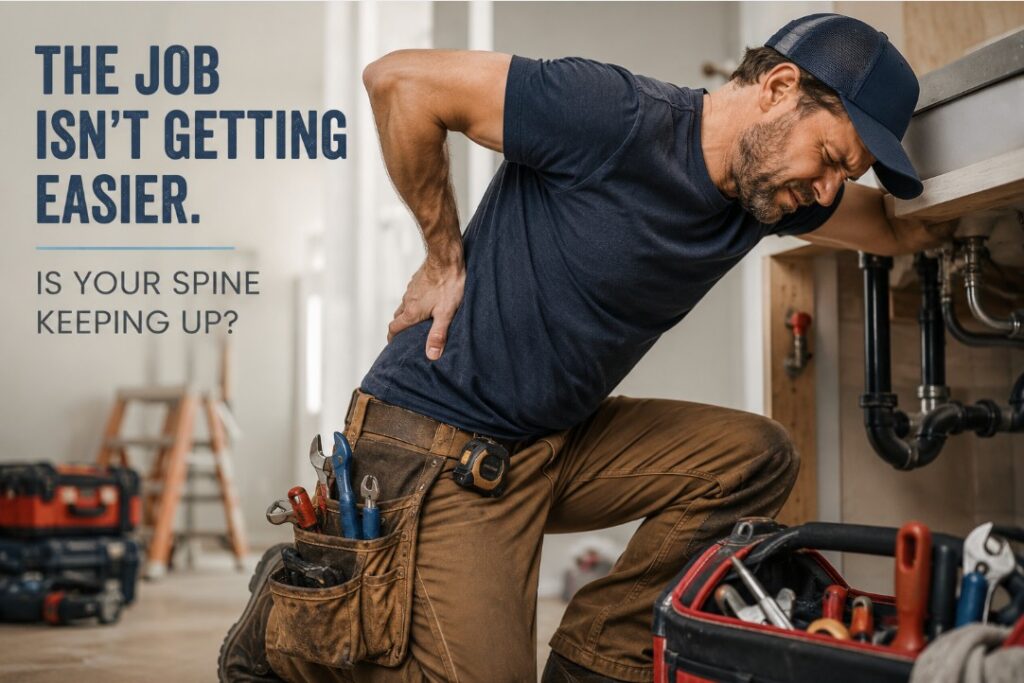
Whether you’re climbing ladders, crawling under sinks, carrying tools, working overhead, lifting materials, or spending hours in awkward positions, your body is constantly being asked to perform.
Plumbers, electricians, HVAC technicians, carpenters, roofers, mechanics, welders, contractors, and skilled tradespeople are some of the hardest-working individuals in our communities.
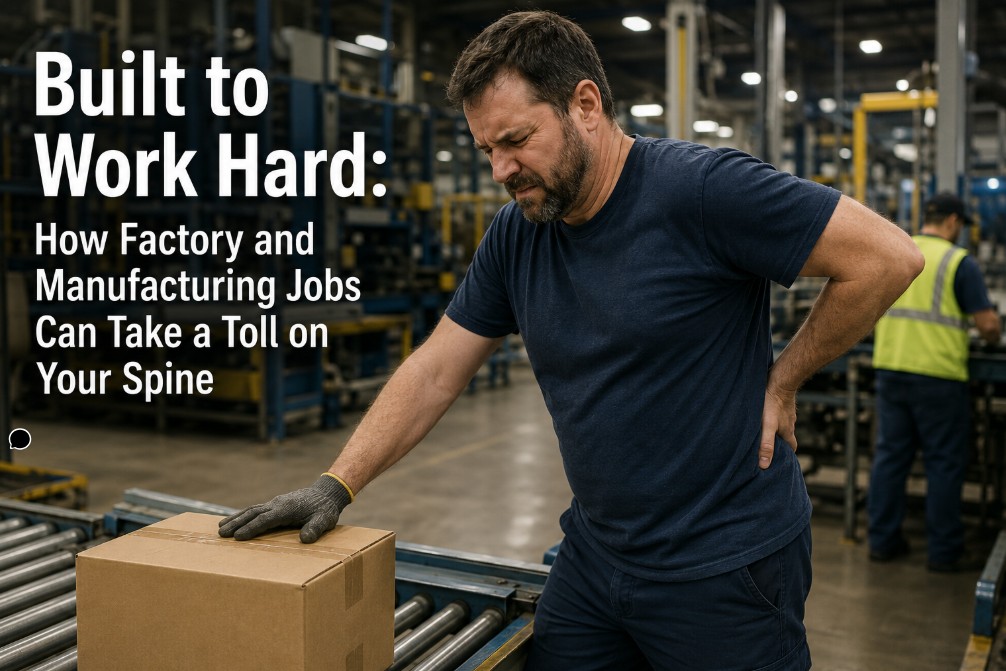
They’re also among the most likely to experience chronic neck and back pain.
At Sauk Spine Chiropractic, we frequently see tradespeople whose pain didn’t begin with a single injury. Instead, it developed gradually through years of demanding physical work.
If that sounds familiar, you’re not alone.
It’s Not Just Heavy Lifting
Many people assume spinal problems only happen when someone lifts something incorrectly.
In reality, some of the most significant stress on the spine comes from repetitive movements and awkward working positions.
Think about the demands of a typical workday:
-
Climbing ladders
-
Working overhead
-
Crawling in tight spaces
-
Kneeling for extended periods
-
Carrying tools and equipment
-
Twisting while lifting
-
Working beneath vehicles
-
Loading and unloading materials
-
Spending hours driving between job sites
Each movement may seem insignificant in the moment.
Over the course of years, however, those stresses add up.
Why Tradespeople Often Hurt in More Than One Place
One of the unique challenges of skilled trades is that the entire body is involved.
A plumber may spend the morning crouched beneath a sink.
An HVAC technician may work overhead in an attic.
A mechanic may spend hours bent over an engine compartment.
An electrician may repeatedly look upward while wiring a ceiling.
Because these jobs require so many different positions, pain often develops in multiple areas simultaneously.
Common complaints include:
-
Shoulder tension
-
Mid-back discomfort
-
Hip pain
-
Arm numbness
-
Leg tingling
-
Reduced mobility
Many workers describe feeling stiff before work, sore after work, and increasingly limited as the years go by.
The Hidden Cost of Repetitive Compression
Your spine is built to move.
But it also absorbs enormous forces throughout the day.
Between each vertebra sits a spinal disc that functions as a cushion and shock absorber.
Every time you lift, carry, bend, twist, climb, or work in awkward positions, those discs absorb stress.
Over time, repeated compression may contribute to:
-
Disc degeneration
-
Bulging discs
-
Herniated discs
-
Pinched nerves
-
Chronic pain
-
Reduced flexibility
The body can compensate for these changes for a long time.
Eventually, however, symptoms often become difficult to ignore.
Warning Signs You Shouldn’t Dismiss
Many tradespeople are incredibly good at working through pain.
The problem is that pain often serves as an early warning system.
Symptoms that deserve attention include:
-
Pain that persists beyond the workday
-
Frequent stiffness
-
Sciatica
-
Numbness or tingling in the arms or legs
-
Difficulty standing upright
-
Reduced range of motion
-
Pain that interferes with sleep
-
Weakness in the arms or legs
These symptoms may indicate that the spine is under significant stress.
How Spinal Decompression May Help
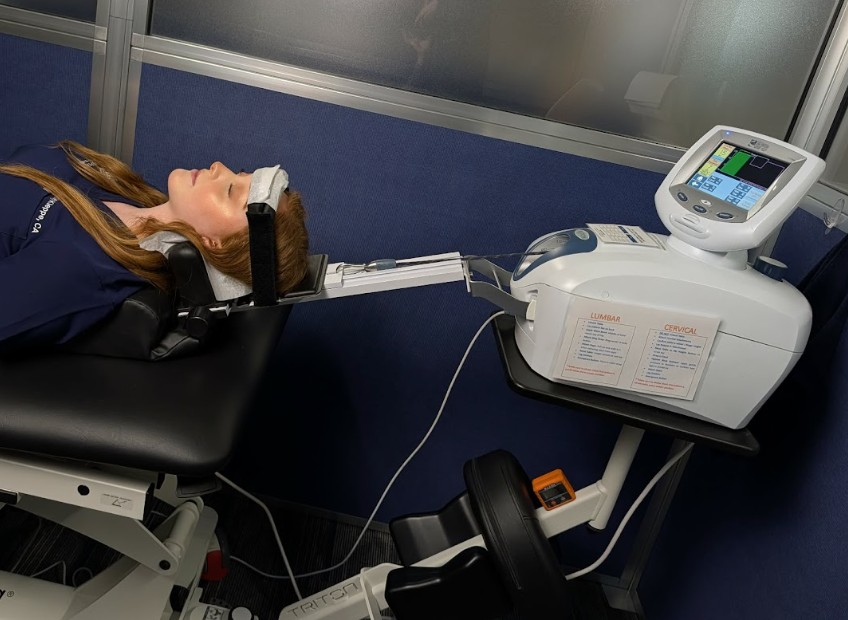
Spinal decompression is a gentle, non-surgical treatment designed to reduce pressure within the spine.
Using a specialized decompression table, controlled stretching forces create space between vertebrae and help relieve pressure on discs and nerves.
For tradespeople experiencing disc-related pain, decompression may help:
-
Reduce pressure on spinal discs
-
Relieve nerve irritation
-
Improve mobility
-
Decrease neck and back pain
-
Reduce sciatica symptoms
-
Support the body’s natural healing processes
Many patients are surprised to discover that the treatment is both comfortable and relaxing.
Cervical Decompression for Neck Pain
Tradespeople who spend time working overhead often place tremendous stress on the neck.
Cervical decompression may help individuals experiencing:
-
Neck pain
-
Shoulder tension
-
Arm pain
-
Numbness or tingling in the hands
-
Disc-related neck conditions
Reducing pressure within the cervical spine can help restore comfort and mobility.
Lumbar Decompression for Back Pain and Sciatica
The lower back often absorbs the greatest physical demands of skilled trades.
Lumbar decompression may help:
-
Relieve chronic low back pain
-
Reduce sciatica symptoms
-
Improve flexibility
-
Decrease nerve irritation
-
Support disc healing
For many patients, the goal is simple: move more comfortably and continue doing the work they enjoy.
Protecting Your Most Important Tool
Every tradesperson relies on tools.
Some are carried in a truck.
Others are worn on a tool belt.
But the most important tool you bring to every job site is your body.
When neck pain, back pain, or sciatica begin limiting what you can do, it’s worth finding out why.
Ignoring symptoms today may lead to bigger challenges tomorrow.
Keep Doing the Work You Love
At Sauk Spine Chiropractic, Dr. John understands the physical demands placed on tradespeople.
His goal isn’t simply to help patients feel better for a few days. It’s to help them continue working, providing for their families, and enjoying life outside of work.
If pain, stiffness, or mobility issues are becoming part of your daily routine, spinal decompression may be worth exploring.
Ready to Learn More?
The job may never get easier.
But your body doesn’t have to keep paying the price.
Schedule a consultation with Sauk Spine Chiropractic and learn whether spinal decompression may help you stay active, productive, and comfortable for years to come.