
When most people think about back injuries, they picture physically demanding work.
Construction workers. Farmers. Warehouse employees.
What many people don’t realize is that sitting for eight or more hours a day can place tremendous stress on the spine.
In fact, some of the most common neck and back problems we see at Sauk Spine Chiropractic occur in people whose jobs require little physical labor at all.
If you spend your day at a computer, in meetings, behind the wheel, or working from home, your spine may be paying a bigger price than you realize.
The Problem With Modern Work
The human body was designed to move.
Yet many of today’s occupations require long periods of sitting with very little variation in posture.
Common “sitting occupations” include:
-
Office workers
-
Accountants
-
Administrative professionals
-
Customer service representatives
-
Remote workers
-
Engineers
-
Software developers
-
Graphic designers
-
Truck dispatchers
-
Call center employees
Even when sitting feels comfortable, remaining in one position for hours at a time creates stress throughout the spine.
Over time, those stresses can contribute to chronic pain and reduced mobility.
What Happens to Your Spine When You Sit All Day?
When you’re standing and moving, your spine naturally shifts position throughout the day.
When you’re sitting, especially while looking at a computer screen, several things happen:
Your Head Moves Forward
The average adult head weighs approximately 10 to 12 pounds.
As the head drifts forward toward a computer screen, the muscles and joints of the neck must work harder to support that weight.
This can contribute to:
-
Shoulder tension
-
Upper back tightness
-
Numbness or tingling into the arms
Many patients don’t realize their neck symptoms are related to their workstation until they undergo an evaluation.
Your Lower Back Loses Its Natural Curve
Most people gradually slouch as the workday progresses.
As posture deteriorates, pressure increases within the discs of the lower back.
Over months and years, this repeated compression can contribute to:
The discomfort may begin as occasional stiffness but often becomes more persistent over time.
Your Body Stops Moving
Movement helps nourish spinal discs and joints.
Long periods of sitting reduce circulation and limit the natural motion that helps keep spinal structures healthy.
The result is often stiffness, soreness, and reduced mobility.
Warning Signs Your Desk Job May Be Affecting Your Spine
Many office workers assume their symptoms are simply part of getting older.
In reality, they may be signs that the spine is under more stress than it can comfortably handle.
Common warning signs include:
-
Neck pain at the end of the workday
-
Frequent headaches
-
Pain between the shoulder blades
-
Lower back stiffness
-
Sciatica
-
Numbness or tingling in the arms or legs
-
Difficulty standing up after prolonged sitting
-
Pain that improves when walking
If these symptoms sound familiar, your spine may benefit from a more comprehensive evaluation.
How Spinal Decompression Can Help
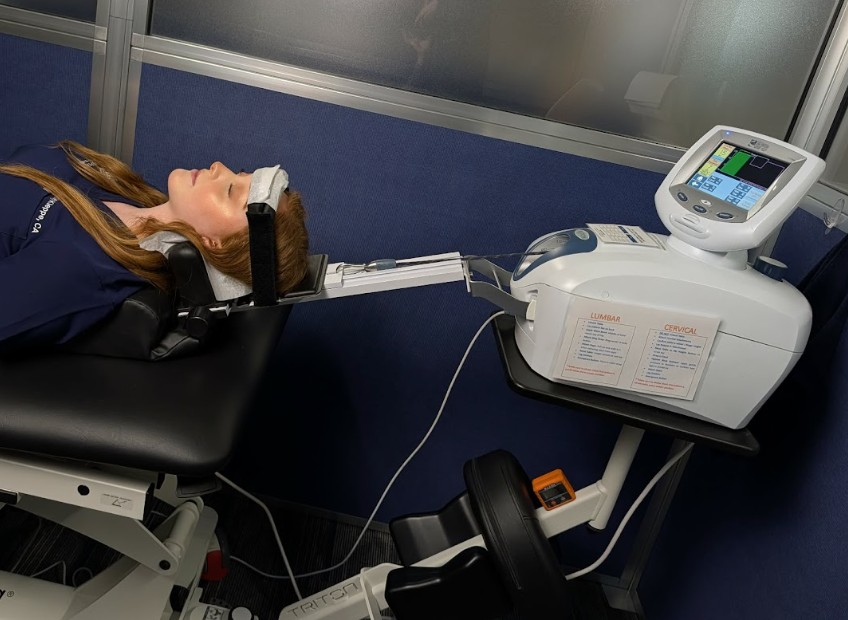
Spinal decompression is a non-surgical treatment designed to relieve pressure within the spine.
Using a specialized decompression table, controlled stretching forces gently create space between vertebrae. This reduces pressure on discs and nerves while supporting the body’s natural healing processes.
Cervical Decompression for Neck Pain
For patients struggling with computer-related neck problems, cervical decompression may help:
-
Reduce pressure on cervical discs
-
Relieve nerve irritation
-
Improve neck mobility
-
Decrease arm pain or tingling
-
Reduce chronic tension and stiffness
Many patients who spend long hours at a desk experience significant relief when pressure is removed from the structures of the neck.
Lumbar Decompression for Lower Back Pain
For patients experiencing chronic low back pain or sciatica, lumbar decompression may help:
-
Reduce pressure on lumbar discs
-
Relieve sciatic nerve irritation
-
Improve flexibility and mobility
-
Reduce leg pain, numbness, and tingling
-
Support disc healing
The goal is not simply to mask symptoms but to address one of the underlying causes of discomfort.
Small Changes Matter, Too
While decompression can be highly effective for the right patient, treatment works best when combined with healthy habits.
We often encourage patients to:
-
Take movement breaks throughout the day
-
Adjust workstation ergonomics
-
Alternate between sitting and standing when possible
-
Stretch regularly
-
Strengthen postural muscles
-
Stay physically active outside of work
Small changes performed consistently can have a significant impact on spinal health.
You Were Designed to Move
If your job requires long hours at a desk, pain doesn’t have to become part of your daily routine.
The neck pain, headaches, back pain, and sciatica that many office workers experience are often signs that the spine is struggling under chronic stress.
At Sauk Spine Chiropractic, Dr. John evaluates the whole picture—your symptoms, your work demands, your lifestyle, and your goals—to determine whether spinal decompression may be an appropriate part of your care plan.
Ready to Find Relief?
If sitting all day is taking a toll on your neck or back, schedule a consultation with Sauk Spine Chiropractic. Together, we’ll identify the source of your discomfort and create a plan to help you move, work, and live more comfortably.